
It goes by several names: the Emerging Church, Emergence Christianity, the New Monasticism. Take your pick, they all are used to describe a modern and growing form of Christianity community that looks to the future largely by looking to the past. Recovering what they believe to have been true of the earliest faith communities, these contemporary faith communities adapt and adopt ancient principles and practices to life in the modern world. What they have recovered is the church that exited before dogma and doctrine, the church before creeds. What they have recovered is the church grounded in practice - a way of life - more so than one resting upon correct doctrine. This is a church of relationships, a church about the business of caring for others, and a church that was passionate about sharing what it had with others. Luke describes it this way in the Book of Acts:
“All the believers were together and had everything in common. They sold property and possessions to give to anyone who had need. Every day they continued to meet together in the temple courts. They broke bread in their homes and ate together with glad and sincere hearts, praising God and enjoying the favor of all the people. And the Lord added to their number daily those who were being saved.”
Meeting people in community, sharing with and caring for the needs people, and praising God for that privilege and all else they were given - these were the hallmarks of the first Christian communities, and people joined them in large numbers. More a movement than an institution, the earliest Christian communities were communities in the world, responding to the love of God and sharing the love of God. They were communities that fully embraced what we mean when we say “Go in peace to love and serve the Lord.” To go was to go out from the church into the community and to minister the grace of God to those in need.
In their ministry to and conversion of the pre-Christian people of Ireland, St Patrick and the Celtic monks who followed him, employed a model of evangelism (there is that scary word) that brought them into close relationship with the Irish people. They lived on the land with the Irish. They listen to their stories and came to see the world through the eyes of the Irish. They took care of the basic needs of the Irish and explained the Gospel to them in a way that made sense to the Irish world view. They gained credibility among the Irish because they knew the Irish and the Irish knew them. And they did not seek to turn the Irish into non-Irish people. They did not seek to make them follow the Roman way, learn Latin, follow Roman church practice, and so forth. Rather, they entered into the Celtic world and developed an indigenous Celtic Christianity. Like the Celtic monks, new monastics are a people who are sent out in peace to love and serve the Lord.
For a long time, the church has been trying to figure out how to get people into the church. The church has developed programs and advertising and a number of other tools for drawing people in, but it seems to take more and bigger attractions to grab attention and pull new people into community. There is another model and it helped turn Ireland and Scotland toward Christianity. It is a model of going out to where the people are living and working. It is a model of coming alongside others, getting to know them and helping them with their needs, and sharing with them in terms they understand the good news of God in Christ. My hope in the coming year for our Good Shepherd family is that we can begin to find our future in something that looks very old. That we can talk about going out and being a faith community in the community, and then do it. May it be for us as we pray on Sundays, “And now, Father, send us out to do the work you have given us to do, to love and serve you as faithful witnesses of Christ our Lord. To him, to you, and to the Holy Spirit, be honor and glory, now and for ever. Amen.”
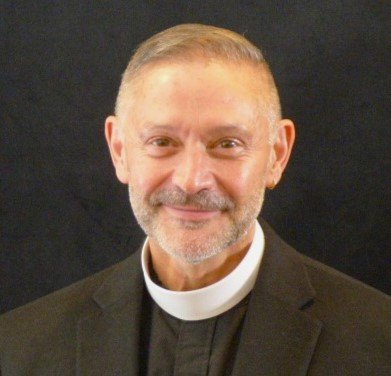
Fr. Bill+