
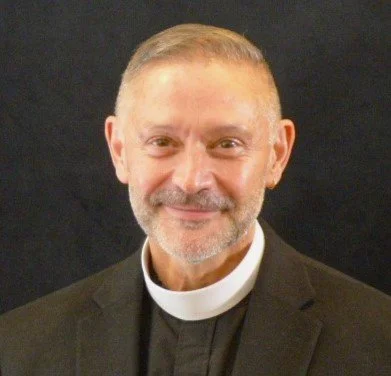
Someone or some persons are missing. They are not where they are expected to be. They are not doing what is expected of them. There is a purpose unfulfilled. Early in the story of God’s people, we find God looking for the man and woman he created. God had placed them in a garden with responsibility for its stewardship. And now they are missing, now not doing what they are meant to do. And God calls out, “Where are you?” To each of us, to us as a parish, to us as the Episcopal branch of the Jesus movement, and to all who call themselves followers of Christ, God calls out, “Where are you?” What do we say in reply?
In his book Lessons in Leadership, Rabbi Lord Jonathan Sacks, chief rabbi of the United Hebrew Congregations of the Commonwealth, interprets the early chapters of the book Genesis as a story of responsibility, of largely failed responsibility. You probably know the stories. Eve eats the apple and offers it to Adam who does as well. When God asks if they ate of the tree, Adam blames Eve and Eve blames the serpent. There is a failure of personal responsibility. A short time later, we read that Cain is jealous of his brother Abel. Cain is warned to fight off sin, but he kills his brother nonetheless. God asks Cain about Abel’s whereabouts and Cain replies “Am I my brother’s keeper?” Cain confesses to the murder, and so he takes personal responsibility, but he has failed in his moral responsibility for the welfare of his brother.
And then we get the story of Noah. Noah is living during a time of great violence and corruption. He is described as “righteous in his generation.” It seems that while everyone else is off track, there still is one who is righteous. As directed, Noah builds an ark, gathers his family and animals and then shuts out the rest of the world. Noah is called righteous but that righteousness has no apparent effect on his neighbors. Nowhere is Noah shown pleading for others to prepare, to change their ways, to repent. And nowhere is Noah shown to grieve the tragedy. Noah did not show collective responsibility and so is known as “a rich man in a fur coat.” You see, when it is cold one can think of oneself and put on a coat or one can light a fire and warm both oneself and others.
Rabbi Sacks writes that the first Hebrew is Abraham. He comes when God called, he rescues his nephew Lot when kidnaped, and he questions God for the well-being of people who are not his own. He shows personal, moral, and collective responsibility. He takes responsibility. He acts. He acts for the sake of Lot and he acts for the sake of those he does not even know. He shows us what is expected of all who are his descendants, all who are children of his God, and all who follow the most notable of his children, Jesus our Lord. “Where are you?”
We have set a vision for the parish that says as God’s shepherds, we the people of this parish will engage with the world through the sharing of our blessings, and by that sharing would strive to make manifest the reign of Heaven on earth. It is a lofty vision and one that all are invited into pursuing. It is a vision that calls for personal, moral, and collective responsibility in using our time, talent, and treasure to meet the needs of this faith community and the needs of our neighbors and beyond.
What will we say when God asks “People of Good Shepherd-Hayesville, where are you?”
Grace upon grace be with you,
Fr. Bill+